The Rise and Fall of Hodaka: A Comprehensive History of a Unique Motorcycle Brand

A Second Earth Day 2025 Article by David Owen and Tim Weaver
2025m04d22 Hodaka Rise and Fall _1
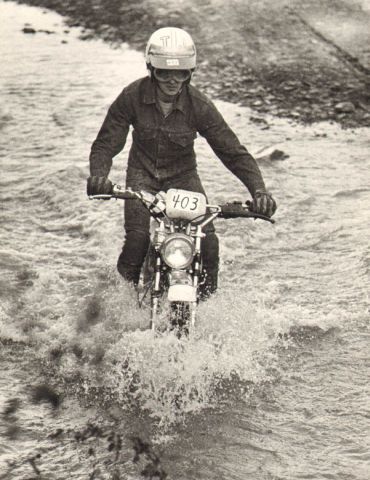
Tim Weaver on his Hodaka at an Enduro (1970's)
Introduction
 
In the annals of motorcycle history, few brands have left a legacy as curious and beloved as Hodaka. Though it only existed for a brief span of time—from the early 1960s to the late 1970s—the Hodaka brand managed to capture the imagination of a generation of American riders. Known for its quirky names, bright red engines, and rugged dual-sport capabilities, Hodaka played an outsized role in shaping the off-road and trail-bike culture in the United States. This essay explores the origins, rise, influence, and eventual decline of the Hodaka motorcycle brand, tracing its development through a unique cross-cultural partnership between Japan and the United States.

The Birth of Hodaka
 
The Hodaka story begins in the early 1960s, a time when the motorcycle market was undergoing significant changes. American riders were increasingly interested in smaller, lightweight bikes that could handle both street and off-road conditions. Japanese manufacturers had begun to flood the U.S. market with inexpensive, reliable machines that stood in stark contrast to the heavier and often less reliable British and American bikes of the era.
 
Hodaka was the product of a partnership between two companies: PABATCO (Pacific Basin Trading Company), based in Athena, Oregon, and Hodaka Industrial Co., Ltd., a small engine manufacturer located in Japan. PABATCO was originally an import-export company, and one of its main activities was distributing Yamaguchi motorcycles in the U.S. When Yamaguchi ceased operations in 1963, PABATCO found itself without a product but with a growing network of dealers and a solid understanding of the American off-road market.
 
PABATCO saw an opportunity to fill a niche by designing its own motorcycle—specifically, a lightweight, off-road-capable trail bike that could meet the demands of the growing American trail-riding scene. However, since the company lacked the facilities to build motorcycles itself, it turned to its former supplier, Hodaka Industrial, to manufacture the machines according to PABATCO’s designs and specifications.
2025m04d22 Hodaka Rise and Fall _2
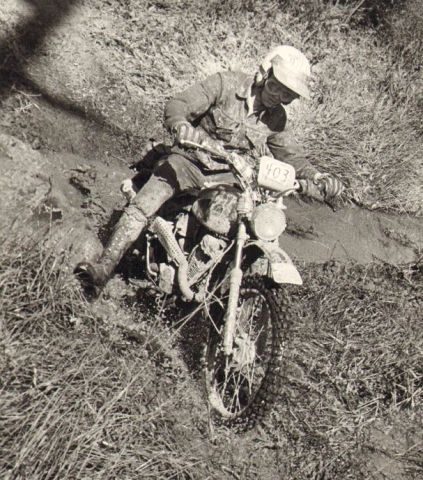
Tim Weaver on his Hodaka at an Enduro (1970's)
The Hodaka Ace 90: An Unlikely Hit
 
The first Hodaka motorcycle, the Ace 90, was introduced in 1964. It was a revelation: a 90cc two-stroke trail bike that was light, affordable, and surprisingly rugged. Featuring a distinctive red-painted engine and a simple, utilitarian design, the Ace 90 immediately found favor with American riders who were looking for a fun, go-anywhere machine.
 
What set the Hodaka apart from the competition was the level of input PABATCO had in its design. Unlike many other Japanese motorcycles at the time, which were built with minimal understanding of the specific demands of the American market, Hodakas were created with direct feedback from American enthusiasts. The PABATCO team, composed of engineers and riders, meticulously tested prototypes on Oregon trails, refining the bike’s performance and reliability before going to market.
 
The Ace 90’s success established Hodaka as a serious player in the small-displacement motorcycle segment. It wasn’t just a cheap alternative to the major brands—it was a capable and fun bike in its own right. Riders praised its strong low-end torque, easy handling, and durable construction. Soon, Hodaka was developing a cult following.

Expansion and Innovation
 
Following the success of the Ace 90, Hodaka expanded its lineup throughout the late 1960s and early 1970s. Models like the Ace 100, the Super Rat, and the Wombat continued the company’s trend of whimsical names and trail-ready capabilities. Each bike was designed with the same philosophy: lightweight, reliable, and purpose-built for off-road adventures.
 
Perhaps the most iconic Hodaka model was the Super Rat 100, introduced in 1970. Marketed as a competition-capable motocross machine, the Super Rat was a stripped-down, high-performance version of the Ace 100. It featured a tuned engine, lightweight frame, and aggressive styling that appealed to a new generation of amateur racers and trail riders. The Super Rat earned a reputation for being fast, fun, and fiercely competitive in the burgeoning motocross scene.
 
Hodaka’s innovation extended beyond just performance. The company was one of the first to recognize the importance of branding and personality in the off-road market. Its bikes had distinctive aesthetics—bright colors, creative model names, and unique logos—that set them apart from the more utilitarian designs of Honda, Yamaha, and Suzuki. Advertisements emphasized fun, freedom, and the “wild” spirit of trail riding, appealing directly to teenagers and young adults who were increasingly becoming the core of the motorcycle-buying public.
2025m04d22 Hodaka Rise and Fall _3
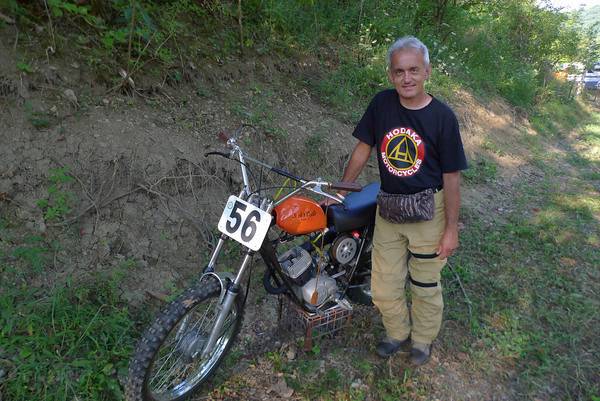
Tim Weaver with his Hodaka Hillclimber (2010's)

The Hodaka Philosophy: Built by Riders, for Riders
 
One of the unique aspects of Hodaka was the way it fused American creativity with Japanese engineering. While Hodaka Industrial handled the manufacturing, PABATCO was responsible for most of the design, testing, and marketing. This partnership allowed the company to be incredibly responsive to customer feedback and evolving market demands.
 
The PABATCO team, based in the small town of Athena, Oregon, was made up of motorcycle enthusiasts who lived and breathed riding. They weren’t corporate suits—they were riders who understood the frustrations and joys of trail riding. As a result, Hodaka bikes were incredibly user-friendly. They were easy to work on, parts were readily available, and the bikes could be modified for racing or recreational use with minimal effort.
 
This approach fostered a sense of community and loyalty among Hodaka riders. Owners often described the bikes as more than just machines—they were companions on adventures, reliable and full of character. Hodaka clubs and races began popping up around the country, reinforcing the brand’s image as a rider-first company.

Challenges and Decline
 
Despite its popularity, Hodaka’s success was not without challenges. As the 1970s progressed, the motorcycle industry underwent a period of intense competition and consolidation. Major Japanese brands like Honda, Yamaha, Suzuki, and Kawasaki began to dominate the off-road and motocross markets, leveraging their massive production capabilities, advanced research and development, and deep pockets for marketing.
 
Hodaka, by contrast, was a relatively small operation. Although it had achieved impressive sales figures—reportedly over 150,000 units during its lifespan—it lacked the scale to compete effectively with the big players. The technology gap also began to widen. Larger companies introduced innovations like liquid-cooled engines, advanced suspension systems, and disc brakes, while Hodaka continued to rely on tried-and-true (but increasingly outdated) designs.
 
Another blow came from within. In the mid-1970s, Hodaka Industrial Co., Ltd., the Japanese manufacturer responsible for producing Hodaka motorcycles, was acquired by Shell Oil Company. Shell’s interest in the motorcycle business was limited, and the new corporate oversight introduced friction into the previously smooth PABATCO-Hodaka relationship. Product development slowed, quality control issues began to emerge, and the brand lost some of its competitive edge.
 
In 1978, after a decade and a half of production, Hodaka ceased operations. PABATCO was eventually sold off, and the Hodaka name disappeared from dealership floors. For many fans, it was the end of an era.
Legacy and Revival
 
Though Hodaka vanished as a commercial entity, its legacy has endured in surprising ways. Today, vintage Hodaka motorcycles are highly prized by collectors and enthusiasts. Events like the annual Hodaka Days rally in Athena, Oregon, celebrate the brand’s history and bring together fans from around the country to race, ride, and reminisce.
 
Restoration parts are still widely available thanks to a dedicated community of suppliers and former employees who have kept the flame alive. The bikes’ simple design makes them relatively easy to restore, and many riders take pride in bringing old Super Rats, Combat Wombats, and Dirt Squirts back to life.
 
More importantly, Hodaka is remembered for its spirit—a company that embraced fun, creativity, and rider-focused design long before those values became buzzwords in the industry. It was a brand that never took itself too seriously, but that managed to build bikes capable of serious performance.

Hodaka in Context: Influence on the Motorcycle Industry
 
While Hodaka never achieved the global dominance of its Japanese peers, its influence on the motorcycle industry is undeniable. The brand helped popularize the concept of dual-sport and trail bikes in the U.S., opening up the world of off-road riding to a broader audience. It also demonstrated the power of small-displacement bikes as entry-level machines, inspiring other manufacturers to develop their own 100cc and 125cc trail and motocross models.
 
Moreover, Hodaka proved that customer engagement and community-building could be just as important as engineering prowess. The company’s emphasis on listening to riders, responding to market needs, and fostering a loyal fanbase set a precedent that would later be echoed by brands like KTM and Beta in the off-road segment.
 
In many ways, Hodaka was ahead of its time. Its fusion of American marketing savvy and Japanese craftsmanship offered a blueprint for cross-cultural collaboration that would become more common in the decades that followed.

Conclusion
 
The story of Hodaka is a story of innovation, passion, and the enduring power of community. Though the brand only existed for a brief window in motorcycle history, its impact has been far-reaching. From its origins as a niche importer in rural Oregon to its status as a cult favorite among vintage motorcycle enthusiasts, Hodaka represents a unique chapter in the evolution of motorcycling in America.
 
It was a brand that refused to conform to industry norms, choosing instead to blaze its own trail—literally and figuratively. In doing so, it captured the hearts of riders who wanted something different, something fun, and something real. And in the hearts of those riders, Hodaka lives on.
Closing Nuggets by Tim Weaver
 

The two Enduro pics were from the 1974 Black Coal National Enduro that started at Lynnville, IN.  It was a great ride.  I-64 was still under construction and there were places where the trail paralleled the new interstate highway.  I think I have the AMA News that reviewed the run and it might be interesting to include a copy of the article on this page.

The Hodaka hillclimber, based on a ’72 Wombat and probably the most worn-out motorcycle I’ve ever restored, was rebuilt in 2010 and run at the AMA Amateur National Hillclimb Championship held at the “Devil’s Staircase” near Oregonia, OH in 2011 as well as at local hillclimbs at Cayuga and Middlebury, IN.

The cool thing about Hodakas in the early 70’s was that they were dirt cheap and easy to work on.  If you bought two you could be a dealer and almost everybody was retailing the damned things.  The biggest retailer was Greenwood LP Gas and Hodaka Sales, the shop owned by Ron LaMastus’ dad and uncle.  It was quite a place to visit back then!!!  Lord, some of the stories I heard were mind blowing.

The 100cc class in motocross and hare scrambles was dominated by Hodakas, usually Super Rats or Ace 100-B’s.  Yeah, Pentons were the bikes that did most of the winning but everybody else ran what they could afford and the little chrome and red bikes were everywhere.  If there were thirty bikes on the line usually more than half of ’em were Hodakas.

I bought my Wombat from a shop on Carson Ave. that mostly dealt with street bikes.  I ended up working there as a wrench during periods of unemployment in the late ’70’s/early ’80’s.  As mentioned it wasn’t uncommon for me and my buddy Al Sochaki to ride them to Brown County, trail ride all day and then ride home.  Later after I graduated I put it back to street form and it served as my daily transportation after I graduated from high school until I bought a “real” street bike the following February.  Chris and I used to ride it everywhere including trips to Brown Co., Eagle Creek and a particularly memorable trip to the State Fair to watch the ’75 Indy Mile.  I also rode it to Kentucky to visit kin.  Good times!!  I have no idea how many miles I rode it as the speedometer died but I’m guessing the final tally was probably fifteen or twenty thousand miles.